
|
|
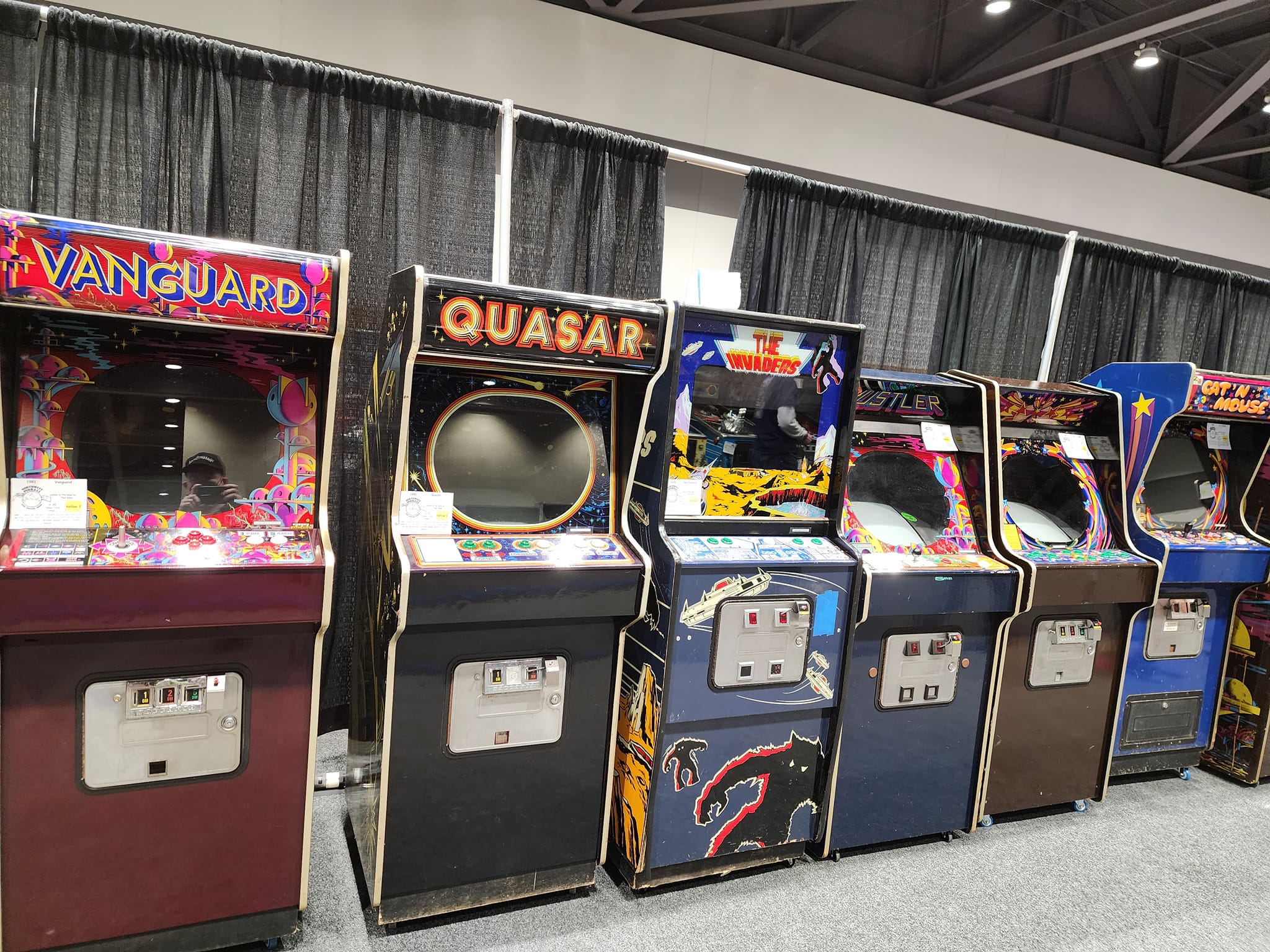
Towards the end of the last day of the show I noticed that the sound wasn't working. Since it was very close to closing, the game was left as is.
|
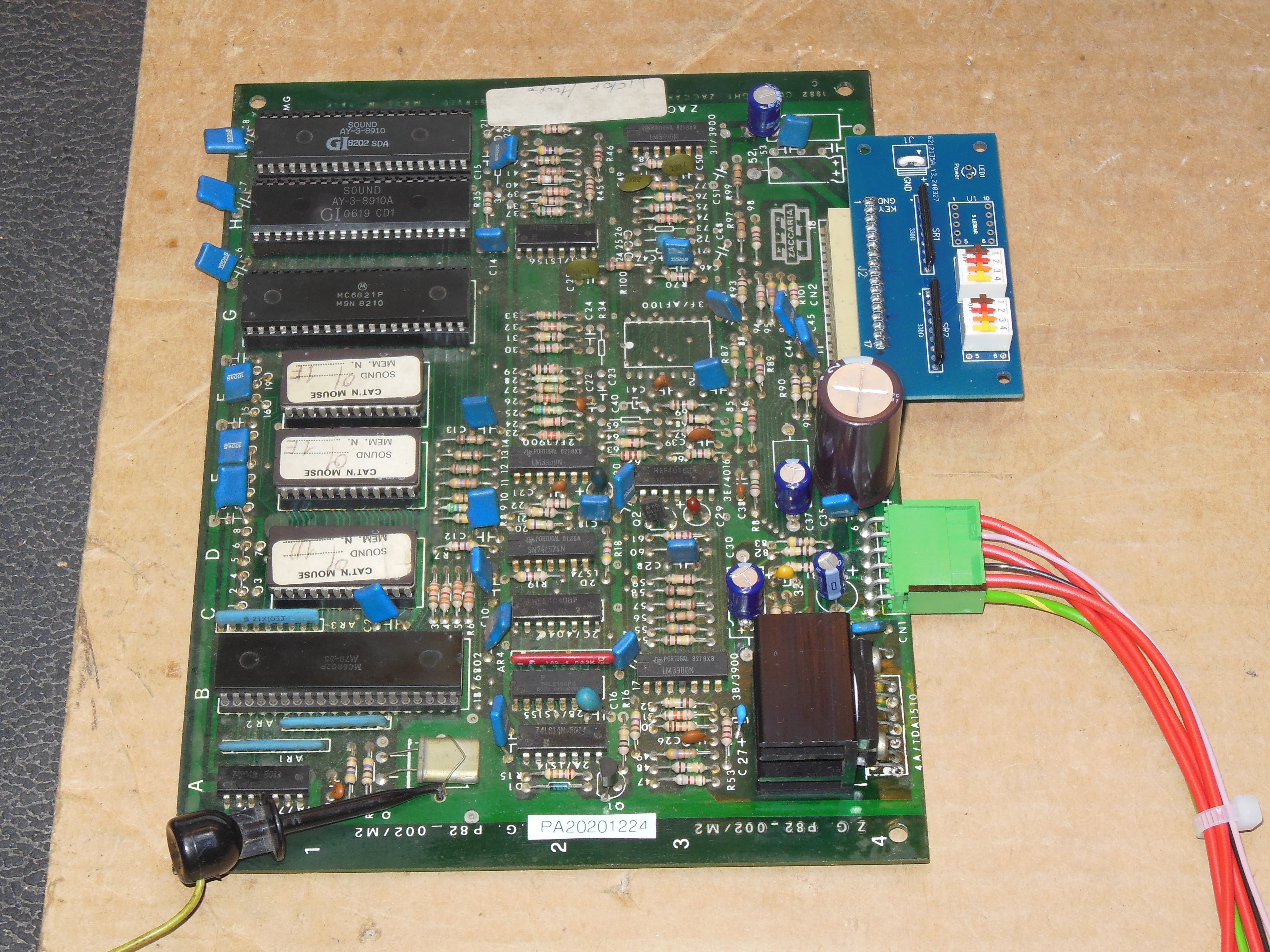
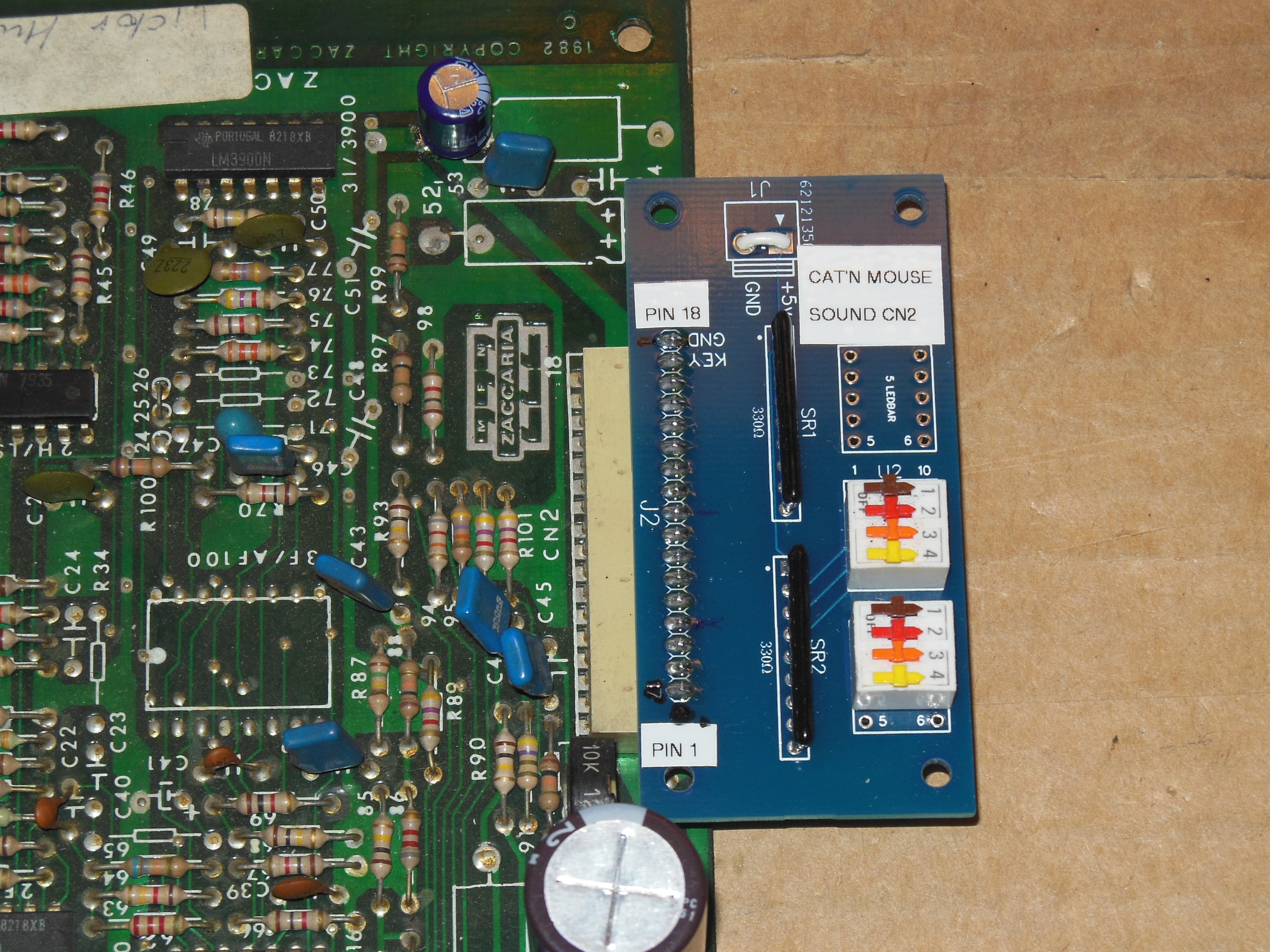
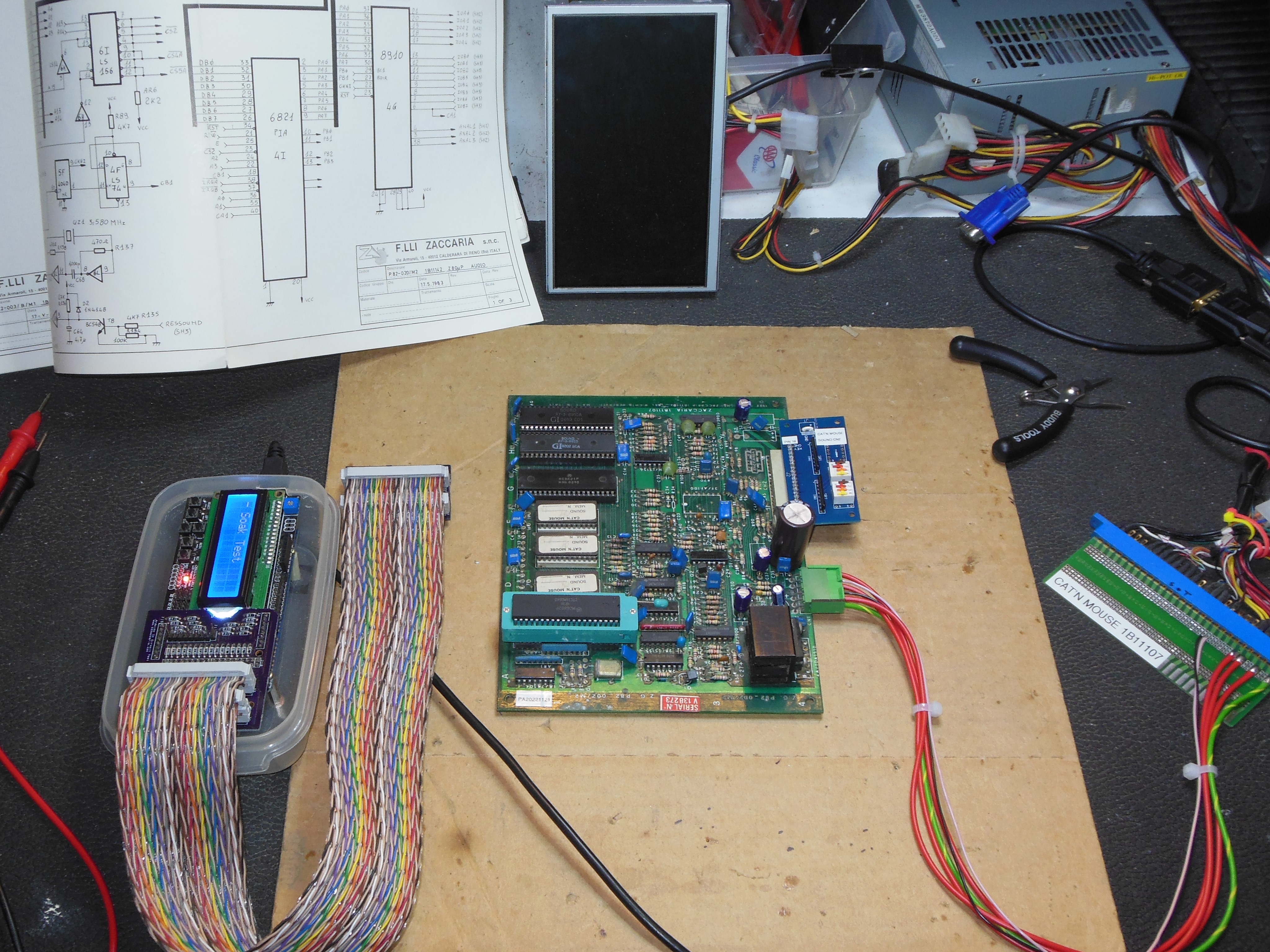
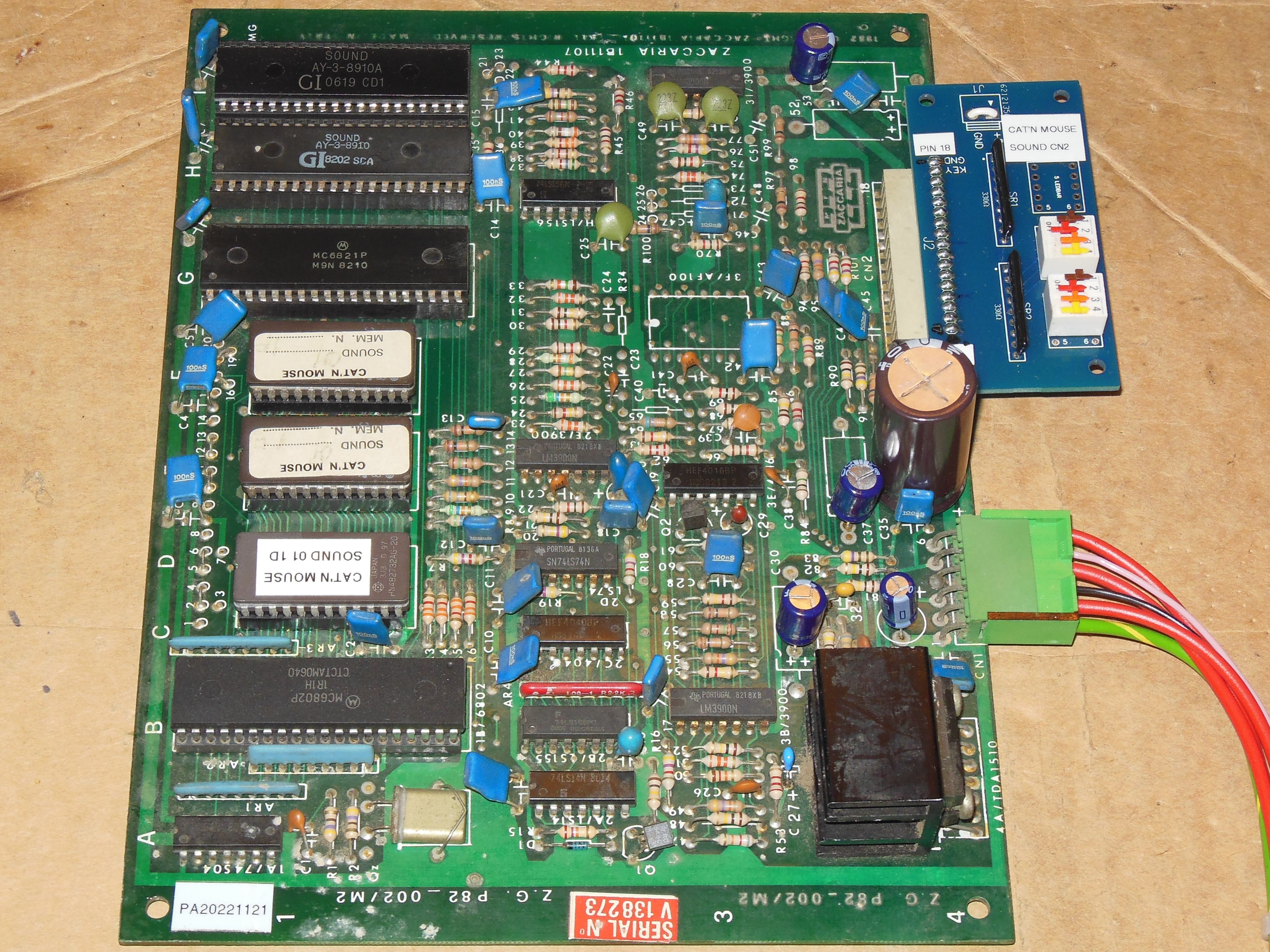
A small JAMMA adaptor was constructed to run the sound PCB on the bench:
| CN2 | Input | 8910 1H | 6821 1G |
|---|---|---|---|
| 1 | - | - | - |
| 2 | - | - | - |
| 3 | - | - | - |
| 4 | RESET | - | - |
| 5 | SOUND5 | Pin 8 (IOB5) | Pin 40 (CA2) |
| 6 | SOUND4 | Pin 9 (IOB4) | - |
| 7 | SOUND3 | Pin 10 (IOB3) | - |
| 8 | SOUND2 | Pin 11 (IOB2) | - |
| 9 | SOUND0 | Pin 13 (IOB0) | - |
| 10 | SOUND1 | Pin 12 (IOB1) | - |
| 11 | - | - | - |
| 12 | - | - | - |
| 13 | - | - | - |
| 14 | - | - | - |
| 15 | - | - | - |
| 16 | - | - | - |
| 17 | - | - | - |
| 18 | GND | - | - |
Chris Force from the Northwest Pinball Collective had designed a small learning PCB that was intended as a LED indicator control panel input tester. Swapping the LED bar displays for DIP switches and bridging the power supply connector made it into a perfect sound command input exerciser for this (and other) later Zaccaria sound boards. The AY-3-8910 inputs have a built in 200uA pull up and the original resistors for the LED bar were 330R that calculates to a 0.066V drop still meeting logic low.
Using the sound command exerciser triggered a continuous low volume single tone. The scope showed access activity on IC 1I (AY-3-8910) and pin 38 was the source of the tone. Swapping IC 1I didn't change the behavior.
|
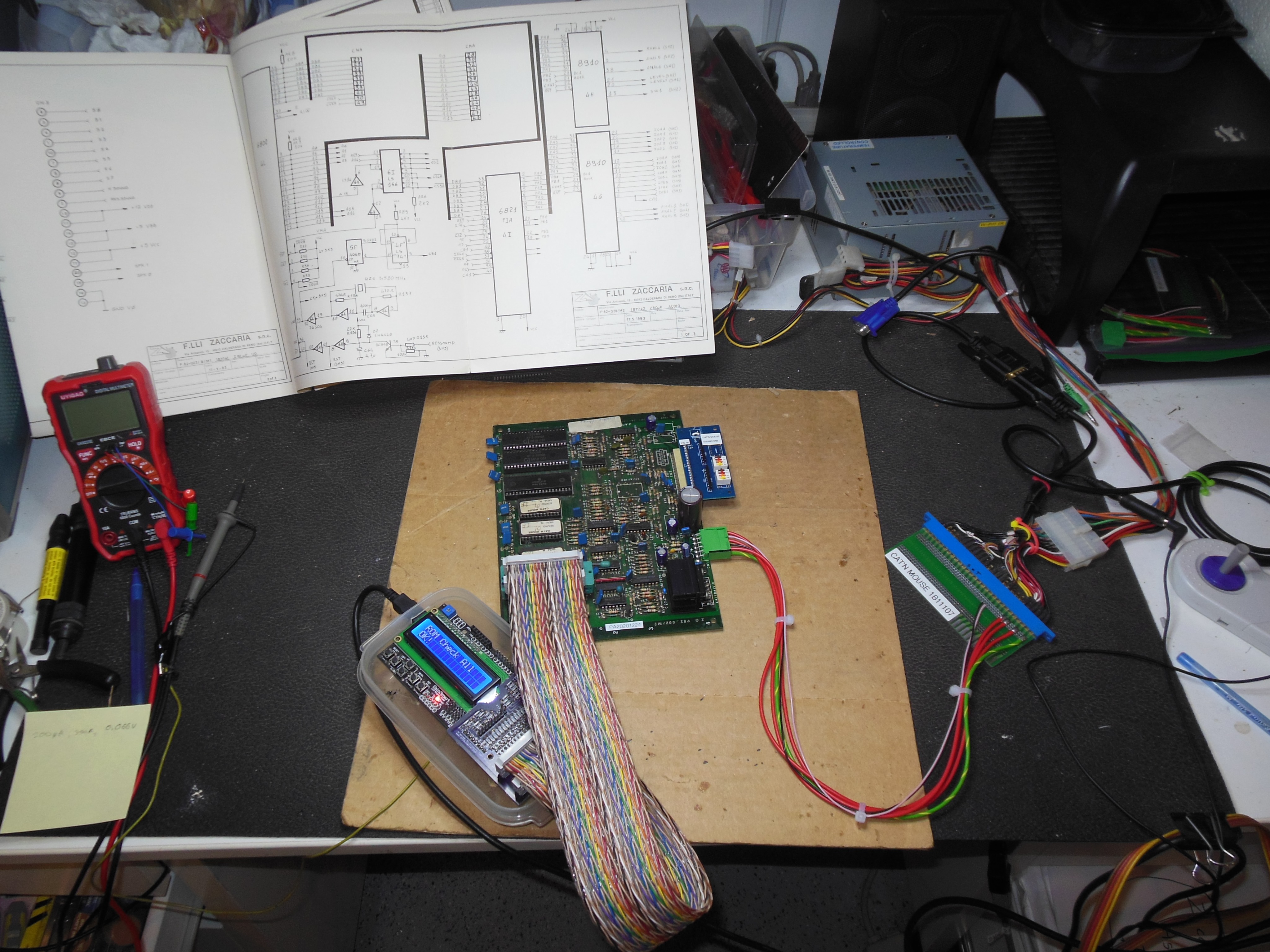
There were some erroneous/misleading comments in the MAME driver about the address of the AY, and with the correct address resolved the ICT "ROM Check All" and "AY Check" passed OK. Checking the clock at IC 4I (6821) pin 18 CB1 found 444Hz measured by scope and 437Hz measured by multimeter, consistent with the MAME setting. The AY-3-8910 master clock measured 1.79MHz, also consistent with the MAME setting. With the both AY-3-8910 & 6821 swapped, both clocks running OK, ICT passing the AY & ROM, I began to suspect the 6802. Swapping the 6802 with the 2nd sound PCB confirmed the 6802 was bad and a new 6802 fixed the sound.
With the sound board working I took the opportunity to map out a few sound commands
with the command input exerciser:
| U2 1 2 3 4 | U3 1 (2->2->2) 3 4 | Output |
|---|---|---|
| 0 0 0 0 | 0 (0->1->0) 0 0 | idle/off |
| 0 0 0 0 | 1 (0->1->0) 0 0 | jaunty witch chase, no repeat |
| 0 0 1 1 | 1 (0->1->0) 0 0 | music, repeating |
| 1 0 1 1 | 1 (0->1->0) 0 0 | La Cucaracha music, repeating |
|
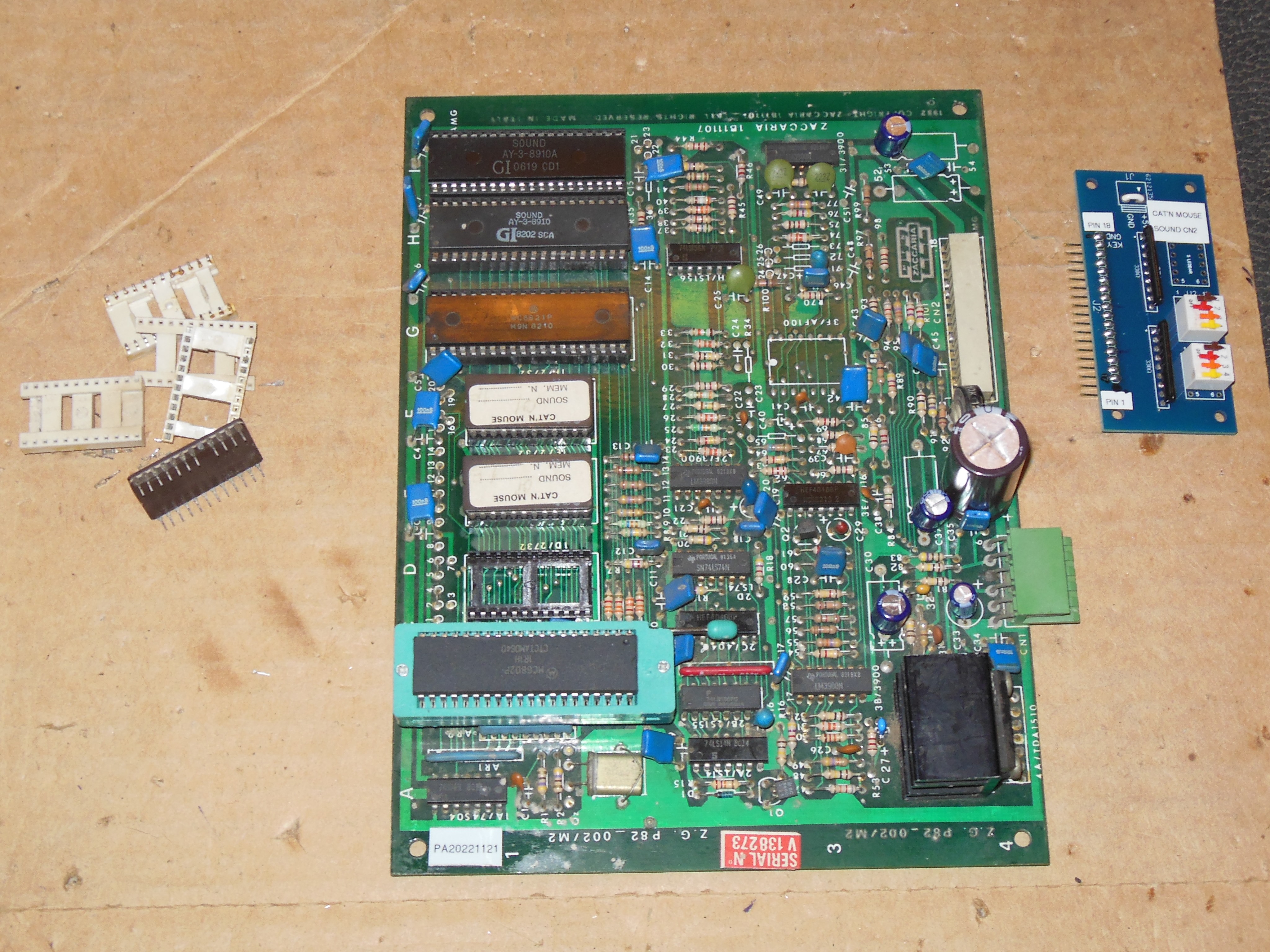
On the bench music stuttered & froze after a few seconds of play and didn't recover. Checking with the Arduino ICT "ROM Check All" failed "E:1E f001 8e ff". Individually checking all of the ROMs confirmed IC 1F, 1D passed and IC 1E failed. Reseating IC 1E caused the test to pass and the "AY Check" also passed. This sound board used the same white IC sockets seen on other early Zaccaria games that were prone to corrosion failure. Whilst cleaning the EPROMs, one pin of IC 1D was rusted through and broke off. All the white IC EPROM sockets were replaced, and a new IC 1D EPROM programmed. On retest, the music played without issue and the board was declared fixed.